
You did everything right. You hired an agency, signed the contract, paid the monthly invoices, and waited for the phone to ring. Weeks turned into months, and the leads never showed up. Maybe you got a few vanity wins along the way. A ranking report that looked impressive. A traffic graph that ticked upward. But none of it turned into actual calls, form fills, or booked appointments. If you’re feeling burned by an SEO investment that hasn’t produced results, you’re not imagining things, and you’re not alone. And it’s not just traditional rankings you need to worry about anymore either, since AI powered search is already reshaping where those leads come from.
Here’s the honest answer: SEO almost never fails because it’s a bad strategy. It fails because it was purported to be a quick fix instead of a long-term asset, or because it was asked to carry your entire lead generation strategy on its own with no support. Organic search takes real time to build authority with Google, and if paid ads weren’t part of the plan, you likely spent months waiting for results you could have started seeing in week one. Small business owners get told to “invest in SEO” without anyone explaining what that investment actually buys, when it pays off, or what should be running alongside it in the meantime.
The good news is that once you understand how SEO and paid ads actually work, both on their own and together, you can fix this without starting over or throwing out everything you’ve already built. This guide breaks down exactly why your results have been slow, what the real difference is between organic and paid strategies, how AI driven search fits into that mix now, and how to build a plan that produces leads now while simultaneously building something that keeps paying off for years.

Why Your SEO Investment Hasn’t Paid Off Yet
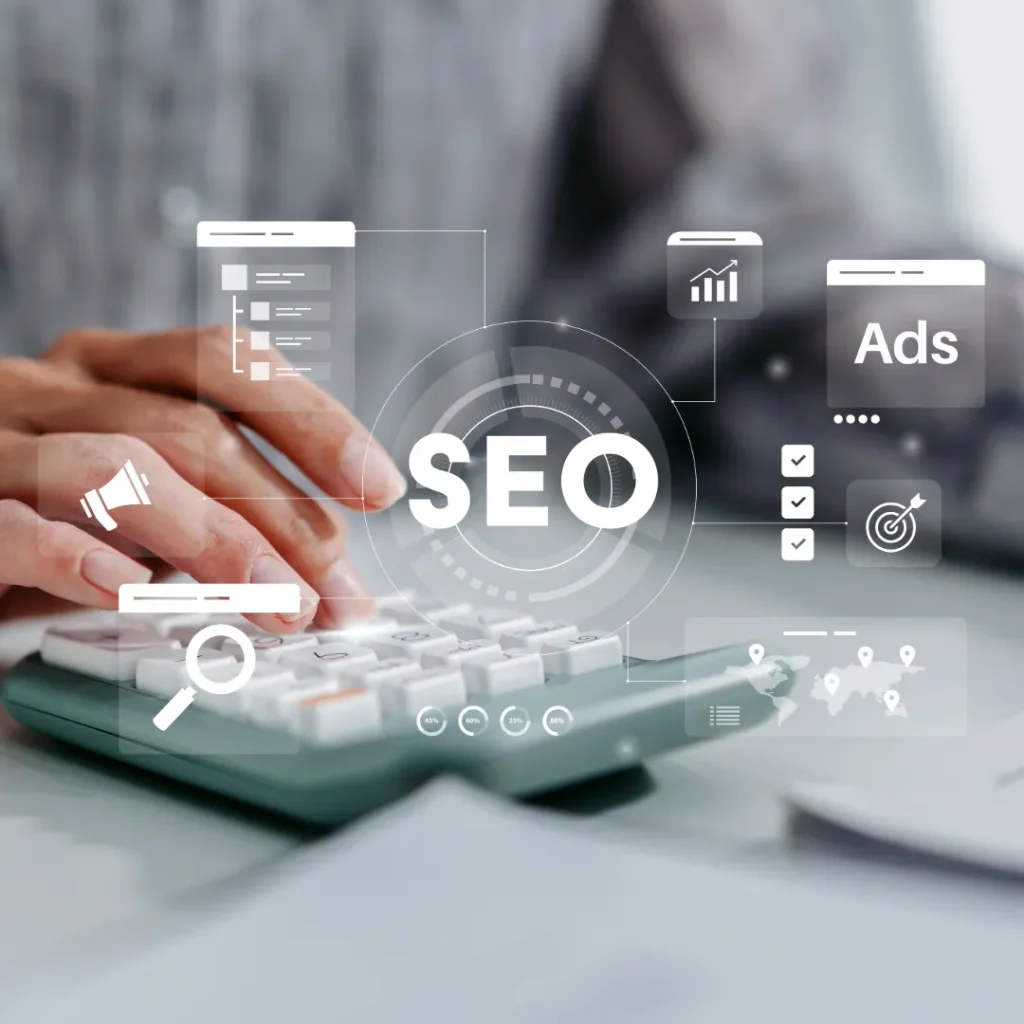
SEO works by building trust with search engines over time. Google needs to see consistent signals: quality content, technical health, backlinks, user engagement, and relevance to a searcher’s intent, before it will rank a site on page one for competitive terms. That process typically takes three to six months, sometimes longer, depending on your industry, your competition, and how strong your website was before the work started.
If your agency never explained that timeline, or worse, promised fast results just to close the deal, that’s the root of your frustration. It’s not that SEO doesn’t work. It was never designed to produce leads overnight, and no one told you what to expect while the foundation was being built underneath everything else.
There’s also a quieter problem that shows up often: SEO technically “worked” in the sense that rankings improved, but targeted the wrong keywords entirely. Ranking on page one for a phrase nobody searches, or a phrase that attracts browsers instead of buyers, will show up nicely in a report and do nothing for your bottom line. Real SEO success is measured in leads and revenue, not positions on a screen.
SEO vs. Paid Ads: What’s Actually Different
Think of your marketing like building a house. SEO is the foundation. It takes time to pour, it needs to cure, and rushing it leads to cracks down the road. But once it’s set, it supports everything else built on top of it and holds up for years with proper maintenance. Paid ads are the front door. They get people inside right away, even while the foundation is still settling underneath.
Neither one replaces the other. A house with a front door and no foundation won’t stand for long. A house with a foundation and no door has no way in. Your marketing needs both working at the same time, each one doing a job that the other can’t do as well.
This is worth repeating because it’s the core of the problem so many business owners run into: the answer is both, not either. Businesses that pick one channel and abandon the other are almost always leaving leads and money sitting on the table.
At a Glance: SEO vs. Paid Ads
|
Factor |
SEO (organic) |
Paid Ads |
|
Speed |
Slow to build, typically 3-6 months before meaningful lead flow |
Fast, leads can start within days of launch |
|
Cost Structure |
Upfront investment in strategy, content, and technical work; lower cost per lead as it matures |
Ongoing spend tied to clicks, impressions, or leads; stops the moment budget stops |
|
Longevity |
Compounds over time and keeps producing after active work slows down |
Only produces while the campaign is actively funded |
|
Control |
Harder to control quickly; changes take weeks to show up |
Highly controllable; budget, targeting, and messaging can be adjusted daily |
|
Best Used For |
Long-term brand authority, lower cost per lead over years, capturing high-intent search traffic |
Immediate lead flow, testing offers and messaging, filling gaps while SEO matures |
Neither column is “better.” They’re built to solve different problems, and most businesses need answers from both sides of the table at the same time.
How Long Does SEO Actually Take?
Most business owners expect SEO to behave like a light switch. In reality, it behaves more like a savings account. Every month of consistent optimization adds to your standing with search engines, and the return builds gradually instead of arriving all at once in a single deposit.
Rankings usually start moving in the first two to three months as search engines begin to recognize new content and technical improvements. More noticeable lead flow tends to show up between months four and six, once enough pages have earned authority, and enough signals have accumulated. Businesses in competitive markets, like legal services, home services in dense metro areas, or e-commerce categories with major national players, may take longer simply because there’s more ground to cover.
If your SEO plan didn’t set that expectation from day one, it’s reasonable to feel misled, even if the strategy itself was sound. A good marketing partner tells you what month one, month three, and month six are supposed to look like before you ever sign a contract, so you’re never left guessing whether the plan is working or just quietly stalled.
It also helps to understand what “working” looks like in the early months. Before leads show up, you should be seeing movement in impressions, keyword rankings for supporting terms, and improved site health metrics. Those are the early signals that the foundation is curing correctly, even before the front door starts swinging open.

Can Paid Ads Work Without SEO, or SEO Without Paid Ads?
Technically, yes. Practically, you’re leaving money on the table either way you go.
Paid ads without SEO means you’re paying for every single visitor, forever, with nothing compounding in the background. The moment you pause your budget, your leads stop, too, and you’re back to zero visibility. You never build the kind of organic presence that keeps working for you at 2 a.m. on a Sunday when your ad budget is depleted for the month.
SEO without paid ads means you’re relying entirely on a slow-building channel while your competitors capture leads today. You might eventually win the long game and build a strong organic position, but you’ll spend months watching opportunities go to the businesses running ads right now, in the exact moment your future customers are searching. For a business that needs revenue this quarter, that gap can be the difference between staying open and closing the doors.
Running both closes that gap and protects you from either weakness. Paid ads buy you time and immediate visibility while SEO grows underneath, quietly building toward the point where you need to spend less on ads to get the same result.
The Risk of Betting on Just One Channel
Relying on a single marketing channel puts your entire lead flow at the mercy of one algorithm, one platform, or one market shift you don’t control. A search engine algorithm update can quietly tank your rankings overnight, sometimes with no clear explanation and no quick fix. A rising cost per click, driven by more competitors entering your market, can eat your ad budget without warning and shrink your return in a matter of weeks.
When SEO and paid ads work together, a dip in one channel doesn’t sink your whole pipeline. If a Google update knocks a few pages down, your paid campaigns keep bringing in leads while you recover. If ad costs spike in a competitive season, your organic traffic keeps the phone ringing at a lower cost. You have a backup system already in motion instead of scrambling to rebuild your entire lead flow from zero.
This is the difference between a marketing plan and a marketing gamble. A gamble puts everything on one number. A plan spreads the risk across channels that support each other, so one bad month in one channel doesn’t threaten the whole business.
How SEO and Paid Ads Work Together
This is where the “both,” not either-or approach really pays off, and it’s worth walking through in practical terms.
Paid ads generate immediate leads and, just as importantly, immediate data. They show you which keywords, offers, headlines, and calls to action actually convert real visitors into real leads, often within the first few weeks of a campaign. That data is gold, and it shouldn’t sit unused in an ads dashboard. It can directly shape your SEO content strategy, so you’re building organic pages around language and offers you already know work, instead of guessing.
Meanwhile, SEO steadily lowers your overall cost per lead as it matures, taking pressure off your ad spend over time. As organic traffic grows, you can often scale back certain paid campaigns or redirect that budget toward new offers and markets, because organic search is now carrying part of the load for free.
The two channels feed each other in both directions. Paid ads buy you speed and insight now. SEO builds a long-term asset that keeps paying off long after a specific campaign ends. A business running both well typically sees a lower blended cost per lead within the first year than a business running either channel alone, because each one is covering for the other’s weak spot.
Where AEO and GEO Fit Into the Picture
Search itself is changing shape. People still type questions into Google, but a growing share of those questions now get answered directly by an AI overview, a chatbot reply, or a generated summary before anyone reaches a website at all. Answer Engine Optimization (AEO) and Generative Engine Optimization (GEO) are the practices built around making sure your business shows up inside those answers, not just on a results page fewer people scroll through than they used to.
AEO focuses on structuring content so search engines and AI tools can pull a clear, direct answer straight from your site: a specific price range, a step by step process, a defined service area, something a machine can lift and present as the answer to a question. GEO goes a layer deeper, shaping how generative tools like AI Overviews and ChatGPT understand and describe your business when someone asks a broader question, even if they never type your name into a search bar.
Traditional SEO and these newer disciplines share a foundation. Clean site structure, accurate information, strong content, and real authority still matter to all of them. But the tactics that win a top ranking in a traditional results page don’t always win a spot inside an AI generated answer. Clear formatting, direct answers placed near the top of a page, structured data, and consistent information about your business across the web carry more weight in an AI driven result than a long, keyword stuffed page ever did.
For a business owner already balancing SEO and paid ads, this isn’t a reason to bolt on a third, disconnected channel. It’s a reason to build content that works across all three from the start. The same page that ranks organically and supports a paid campaign can, with the right structure, also become the source an AI tool pulls from when a potential customer asks a question in a chat window instead of a search bar. Skipping that shift means losing visibility in a part of search that keeps growing month over month, taking a share of your future customers with it.
Which Channel Is Right for Your Business Right Now?

If you need leads immediately, cash flow is tight, or you’re testing a brand new offer to see if it resonates, paid ads should lead the strategy while SEO builds underneath. Paid campaigns give you fast feedback and revenue while the slower channel matures in the background.
If you already have steady lead flow and want to lower your long-term cost per lead, SEO deserves a bigger share of the budget, with paid ads filling seasonal gaps or supporting new service launches. Businesses in this position often use paid ads more surgically, targeting specific high-value services or geographic areas instead of running broad, always-on campaigns.
For most businesses stuck in the “spent thousands, got nothing” position, the honest answer is rarely either channel alone. It’s a plan that uses both, sequenced correctly for your situation, and measured against real numbers instead of vanity metrics like impressions or session counts that never turn into revenue.
Common Questions Business Owners Ask at This Stage
Should I fire my current SEO provider? Not necessarily. Before making that call, ask for a clear breakdown of what’s been done, what the keyword targets were, and what the six-month projection looks like. If those answers are vague or missing, that’s a red flag worth acting on.
Is it too late to add paid ads if I’ve already been doing SEO for months? No. Paid ads can be layered in at any point and often accelerate the return on the SEO work you’ve already paid for, since you can immediately start testing the offers and messaging your organic content is built around.
How much should I budget for both channels together? This depends heavily on your industry, market size, and current lead volume, but the guiding principle stays the same: enough in paid ads to keep leads flowing now, and a consistent, sustained investment in SEO so the foundation keeps curing instead of stalling out halfway through.
A Plan Built on Real Data, Not Guesswork
You didn’t waste your money on SEO. You were likely missing the other half of the equation, or the timeline was never set correctly from the start, leaving you frustrated by a strategy that just needed a partner running alongside it. A-Squared Marketing builds strategies that combine paid ads, organic search, and the structure AI tools now look for, so you get leads now while building the asset that keeps producing them for years to come.
No hidden fees, no guessing games behind pretty reports, and no stalled growth while you wait and wonder if the plan is even working. Just a clear plan, verified results, and a partner who tells you the truth about what it actually takes to grow a business the right way.
Claim Your Free Marketing Accelerator Session and find out exactly where your current strategy is falling short, and what it will take to fix it for good.